More than 20 years ago, The Boss showed that he was able to do more than just strum a guitar and write great rock & roll songs. It turns out that one of New Jersey’s most notable musical exports also had a good handle on the future of media.
Right now, we’re seeing many brands scrambling to provide content for their various social and traditional media channels, and then become disappointed when that content doesn’t generate the amount of likes, shares, comments, etc., that they feel would make the production of that content a success.
The issue? We haven't been telling the whole truth.
Marketers and so-called social media experts have been preaching for years that ‘content is king’ and now with social media, making sure that you have a presence on every digital channel available. The reality is that’s not the entire truth. See our previous post on Meerkat for more insight on this one.
As social media matures, we’re seeing a cultural reset of how people use it and how they follow brands and individuals. Whereas people tended to be ok friending and liking hundreds of people and brands on Facebook, they’re curating who and what they follow on Instagram.
People have more options now and are less willing to waste their time.
Consumers have more options than ever before. It’s not enough to just to create content, it needs to be good content… content worth sharing and watching.
It doesn’t matter if you’re on 57 social media channels or just five. If you're your content isn’t endearing to your audience, they will find something else to watch.
SanDiego publicrelations socialmedia actionsports outdoorpr snowboardpr San Diego action sports public relations social media outdoor PR experts
This is the biggest misconception people have when launching a PR or media relations campaign. It's common even among seasoned marketers.
But it's the truth.
Here's a tip: Journalists are not sitting around waiting to regurgitate what they’re sent by PR people. They are not parrots.
We were reminded about this we saw this Tweet linking to The Walking Deadline from Billy Brown, a journalist we work with fairly regularly.
Billy, like many journalists/bloggers/content creators/whatever you want to call them, is not a parrot. Also, Billy is not an idiot and can think for himself. Why is this important to keep in mind?
If we put in the headline of a press release or subject line of an email “This Is A Game Changer!” or "This Is The Best Thing Ever!" then it better be a game-changer, or else Billy will think twice before looking at our pitch next time around. Keep in mind that we can send things to Billy that aren’t game-changers, but before we do, we better be able to explain why it’s worth his time or else we're going to sour the relationship.
Simple enough? You'd think so, but time and again PR people are asked to push things to media that either aren't newsworthy or so overstated that they turn off the intended media targets.
Here’s what you need to keep in mind when trying to forge relationships with journalists and what you need to do to ensure your efforts are deemed newsworthy.
For the most part, media outlets need make money: They accomplish this based on selling advertising in some shape or form, the rates for which are calculated from publication sales, website traffic, Nielsen ratings, headline clicks, etc. It’s the journalist’s job to create compelling stories, relevant to the media outlet’s specific audience, that will help with this.
What may be a good story to you and/or about your brand may not help with the point above. You need to consider that. And while your pitch doesn’t have to be a game-changer to secure coverage, you do need to explain what value it has to offer.
Personally, when looking to hire consultants for our partners, we’ve found that the best PR people are those that can secure coverage for the brands that aren’t the leaders in their space. Our overused phrase in this instance is that anyone can pitch an iPhone to the media. Everyone wants to cover the next iPhone.
Journalists are busy. They’re not waiting around for your news, regardless of their need to drive revenue for the media outlets they're working for. They’re most likely not going to drop what they’re doing unless what you’re offering is incredibly monumental in the total scope of their relevant news world. And the more time you can give them, the better.
Even that Instagram personality with 100k that you so desperately want to feature your brand using a VSCO picture may work days, if not weeks in advance. Local media have their own deadlines, as do journalists who write for magazines and websites.
Everyone is your competition for media coverage. Every brand, regardless of newsworthiness, if they're engaging in PR, they're potentially blocking you from securing media coverage.
Journalists have their own coverage areas and interests. This gets overlooked often. Some will cover a range of topics, others not so much. Some just don't like certain brands. It happens. A finance reporter at one publication may cover everything from credit cards to mortgages, but at another media outlet, those topics could be spread across multiple reporters. This leads us to our next point...
You need to go to the right person at the right publication with the right pitch. At your own company, you don’t drop off a creative brief for a new logo design with the accounting department, do you? Sure, they may pass it onto the right people, but why would you ask them to do that? They’re busy handling accounting related tasks and your request, in addition to being annoying, may cause them to think twice about getting back to you in the future.
Send your news at the right time. We can't stress that enough. This is going to vary by what sort of media you're targeting, but again, Billy and others like him aren't just waiting by their laptops for emails from their favorite PR people every minute of the day.
We'll close with this because potential clients often ask about media lists and networks.
Relationships matter, but the story being pitched is more important.
Remedy has developed some incredible relationships and in our network of colleagues, it's fairly easy to connect to journalists we've never worked with before. The same goes for many other PR consultants and firms and a lot of them will agree that the relationship won’t matter if we don’t follow some simple points outlined above.
If you want to secure editorial coverage for your brand, you need to look at it from the reporter’s perspective and go from there. Give them a relevant story for their coverage area(s), presented in a way they want to see it and with time to consider it.
public relations social media san diego marketing outdoor retailer healthcare PR guru experts craft beer startup convergence wework adweek advertising tips marketing hacks
We can think of a few reasons, the majority of which stem from a lack of understanding by many in terms of what we as PR people do. Here's the main one:
Your PR team cannot guarantee you editorial coverage.
The modern media relations pro is competing against more and more people for the attention of fewer journalists. Relationships and so-called "lists" help, but only somewhat. And unfortunately, those "lists" can be purchased, which leads more PR "pros" spamming journalists with off-base pitches that clog their inboxes and flood their voicemail systems. For example Susan Adams at Forbes has gone on record as saying:
The media landscape is constantly changing. What worked last year may not work next week. Even the online media world is changing. Some digital outlets will turn stories around in hours, some in months. We're also seeing that trade media, which typically did have the time and space for industry related announcements, are becoming overwhelmed.
Unfortunately, when it comes to brands spending on PR, it's hard to gauge the value of something that isn't guaranteed to work versus advertising, which at the least, you are guaranteed to see and/or feel (Note: We LOVE advertising, but the purchase of an ad doesn't guarantee anything other than the visibility of the ad itself."
On top of that, many of the brands we approach to partner with tell us they've had PR teams in the past, but they failed to deliver. Did they? Possibly. What we usually hear and see is that these PR teams showcase some really great case studies, but neglect to tell their clients that these results just don't happen overnight or for every client they work with.
So what's the solution?
We need to be honest with our clients and with ourselves.
We, as PR people, need to educate clients on not just the value of PR, but also how the PR world works. We can no more guarantee editorial coverage than you can guarantee a print ad will move the needle on your objective. As a whole, the PR industry has to do a better job explaining to clients the nature of what we do and how the media operates.
San Diego Public Relations, San Diego Best Public Relations, PR San Diego, PR experts in San Diego, social media experts San Diego, expert PR san diego, action sports PR, action sports social media, San Diego's best PR resource, San Diego Lifestyle Public Relations, San Diego's best PR resource, San Diego PR resources, San Diego referred PR, PR San Diego, Lifestyle San Diego public relations public relations, San Diego, Public Relations
If you're reading the mainstream business and tech news, then you already know GM is going to stop advertising on Facebook. Does this mean Facebook isn't right for your brand's marketing strategy? No more so than saying a Super Bowl ad, radio campaign or regional event series isn't right either. It's too grand a statement to make without looking at all of the details, including what's going on at the brand and how it's been leveraging new and not-so-new media.
The reason we're drawn to this news isn't because we're eagerly awaiting the Facebook IPO. It's because the Remedy team prides itself on looking at why past communications programs didn't work, before taking on new ones for potential clients. That's why we have the PR Checkup (<-- click the link, you'll be glad you did!), so we can take a deep look at why potential clients are unhappy with their previous communications programs and to ensure we're going to be a good resource for them. Sometimes, we may tell a potential client they're getting great results for what they have to offer. Others, it may turn out it's the patient (client) and not the physician's (previous firm's) fault.
GM's social media strategy was not working for them in regards to Facebook. Perhaps it was their execution, the number of agencies involved, the strategy itself, how they engaged or maybe Facebook isn't where they should be. We haven't done a deep dive into it and since GM hasn't filled out the PR Checkup, it's unlikely we're going to spend too much time dwelling on it.
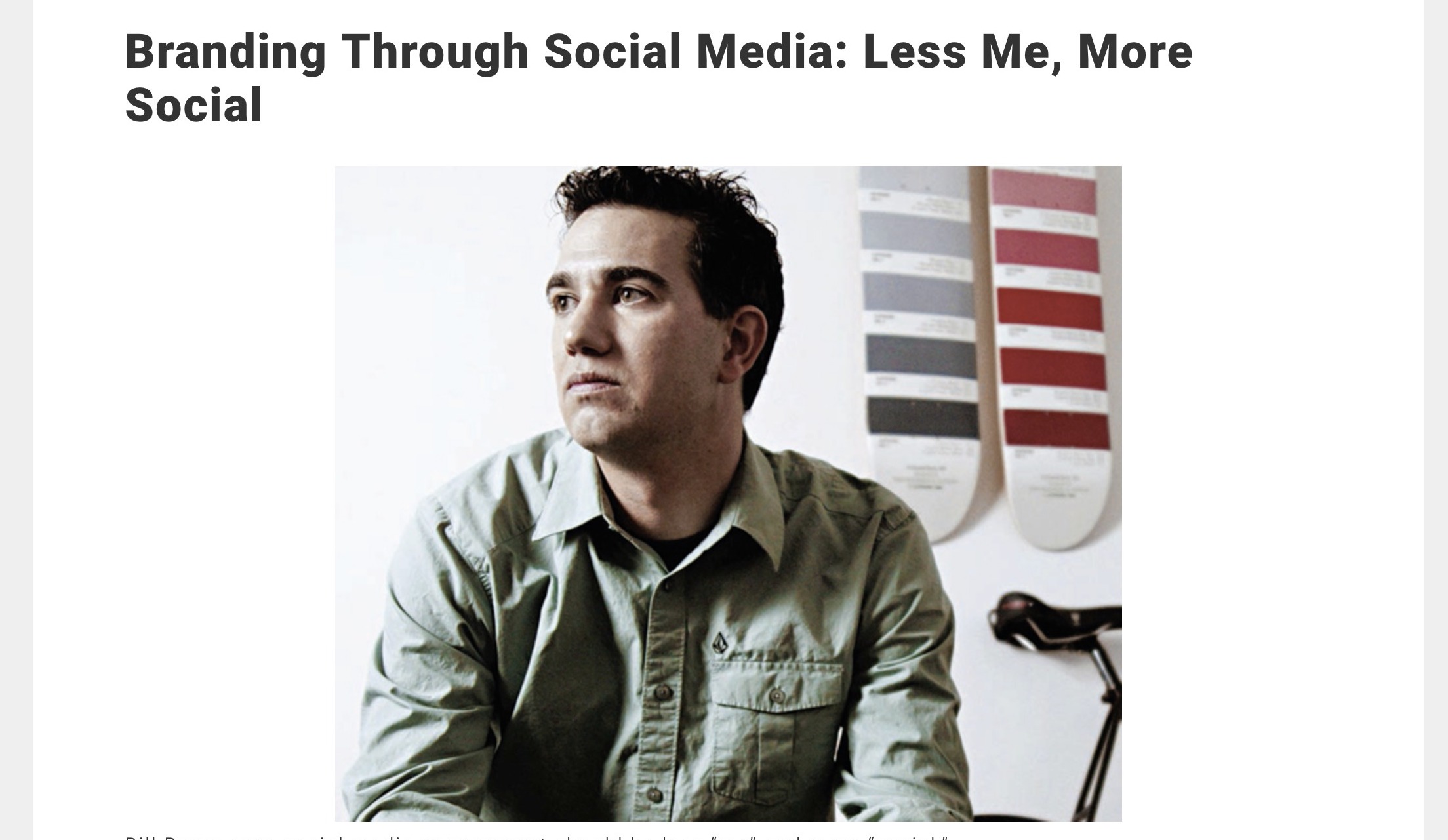
In the end, while some would blame Facebook, it's important to look at the social media and PR programs they have there as well. What was the goal of their social media policy, did it tie back to non-social initiatives and in the end, was the execution appropriate? Let's face it, it's not rare for many in the public relations world (San Diego and on a global scale) to sell themselves as a social media consultant these days. Even one of our directors, Bill Byrne, has an 'advanced certificate' in the craft. That being said, Bill and many others will tell you that there isn't a one-size-fits-all approach to social media and the same goes for PR in general.
Perhaps the audience GM was trying to reach wasn't on Facebook? Tie it back to something else that's massive in reach, such as the Super Bowl. We've done a lot of work in the action sports world, but we don't necessarilly believe that a Super Bowl ad is right for our clients in that space. But then again, if you're someone like Quiksilver (who Bill has worked with in a former life) then maybe a 30 second spot for your NFL licensed board shorts would be right for your brand.
If you're looking for another article on Facebook and GM, check out the WSJ's story here. And thanks to these guys for the logo we used in the header for this post.